

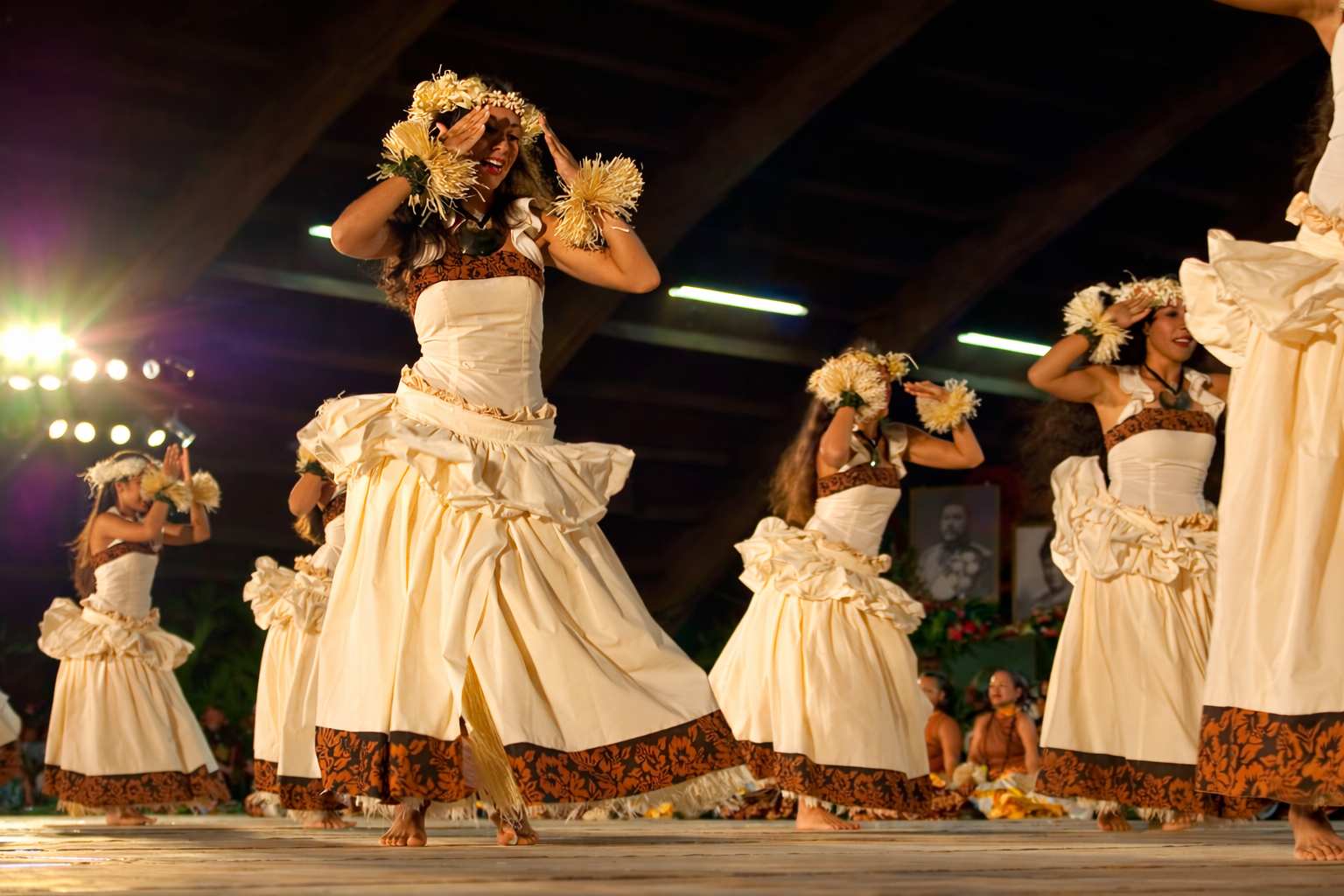
Every spring, just after Easter, the town of Hilo becomes the cultural heartbeat of Hawai‘i during the Merrie Monarch Festival.
For many, it’s known as the “Super Bowl of Hula,” and the most premier hula competition in the world. But it didn’t start that way, and there is much more to it.
The festival takes its name from King David Kalākaua, who ruled at a time when Hawaiian traditions were being pushed aside. He believed that if the culture was going to survive, it had to be lived, not hidden. Hula, in particular, had been discouraged from public life, but he brought it back into view, not as entertainment, but as something worth preserving. That belief still shapes what happens in Hilo today.
At its core, Merrie Monarch is a three-night competition, but calling it that only tells part of the story. The top hālau from across the islands arrive with their kumu and haumāna, each group carrying years, often generations, of training, knowledge, and responsibility. What unfolds on stage is not something put together for the moment. It is something that has been built over time.
The week begins with the Miss Aloha Hula competition, where individual dancers perform both kahiko and ʻauana. It is not just about how well they move, but whether they can fully carry what has been passed down to them. The following night shifts into kahiko, where chant, percussion, and movement come together in a way that feels grounded and closely tied to history. By the third night, the same hālau return to perform ʻauana, more fluid and melodic, shaped over time by outside influences, but still rooted in storytelling. One reflects origin, the other evolution, and both are essential to understanding the full picture of hula.
Throughout it all, respected kumu serve as judges, paying attention to every detail, chant, choreography, adornment, and presentation. The expectations are high, because what is being represented carries weight. And that is really the difference.
What you are watching on that stage is not just performance.
Each hālau is presenting something that has been passed down, protected, and practiced over time. The precision matters, but so does the continuity behind it.
Beyond the stage, that same feeling carries through the town. During Merrie Monarch week, Hilo fills with families, practitioners, and visitors who come not just to watch, but to be present. Niʻihau shell leis, pāpale, and muʻumuʻu are worn with intention. Hawaiian arts, crafts, and traditions are shared in a way that feels lived in, not put on. It does not feel staged. It feels ongoing.
For many, Merrie Monarch is not just something to attend. It is something to be part of and witnessed.
This year, the competition runs from April 9 to 11 and can be viewed locally on Channel 6 starting around 6 PM. If you are watching this week, it is worth paying attention to what is being carried forward, not just what is being performed.
The name “Merrie Monarch” itself reflects the legacy behind it. King David Kalākaua ruled from 1874 to 1891 during a period of rapid Western influence in Hawai‘i, and he believed the survival of the Hawaiian people depended on the survival of their culture. He lifted restrictions that had discouraged hula and reintroduced it into public life, including at his 1883 coronation. During his reign, both hula kahiko and what would become hula ʻauana continued to develop, reflecting both tradition and change.
His appreciation for music, dance, and celebration earned him the nickname “The Merrie Monarch.” Today, the festival that bears his name remains the most respected stage for hula, and a continuation of what he set back in motion.
