

Where Are the Best Places to Live on Maui?
A Neighborhood, Lifestyle, and Real Estate Guide

What Kind of Maui Lifestyle (and Property) Do You Want?
Before exploring listings, define your ideal Maui lifestyle. This helps filter properties that fit your daily life.
Consider your preferences: walk to the beach or drive 20–30 minutes? Warm, sunny areas or cooler, cloudier spots? Quiet local vibes or resort-style living? Yard or condo amenities? Full-time, second home, or retirement property?
Next, think real estate: Maui offers condos, single-family homes, and rural acreage. Some buyers focus on affordability, others on long-term appreciation. If short-term rental income matters, check zoning and regulations with Maui County.
For current pricing and inventory trends, see the Maui Real Estate Market Report.
Quick Match: Your Vibe vs Maui Areas
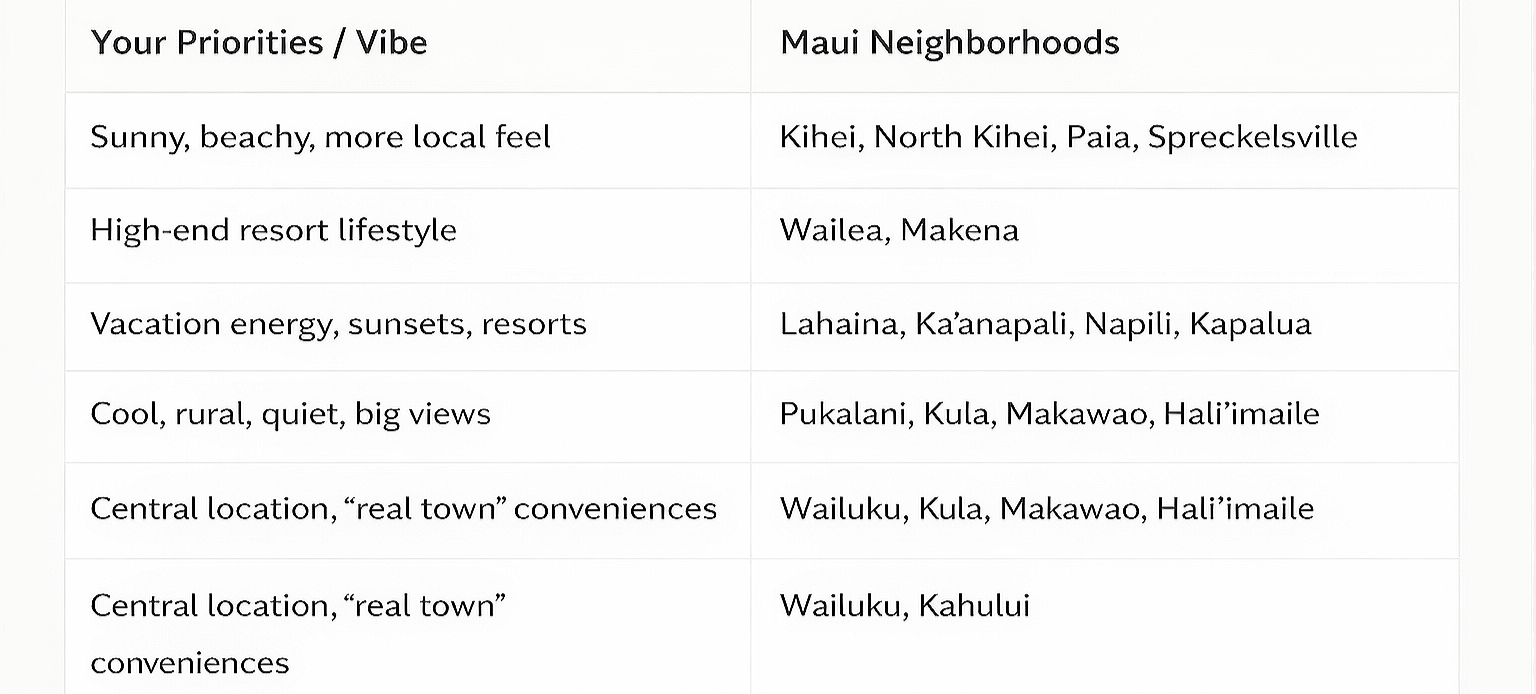
South Maui: Kihei, Wailea, and Makena
Popular for dry, sunny weather and beach access. Homes range from condos to luxury estates. Explore Go Hawaiʻi – Maui for regional insights.
Kihei: Casual beach-town, mix of locals and visitors. Condos near beaches, homes inland. Check HOA and rental rules. Good balance of access and affordability. See Maui Real Estate Market Report.
Wailea & Makena: Luxury living with resort-style amenities. High-end condos, gated communities, oceanfront estates. Ideal for second homes and retirees. Higher prices and association fees. For retirement insights, see 10 Reasons Why Maui Is the Best Place to Retire
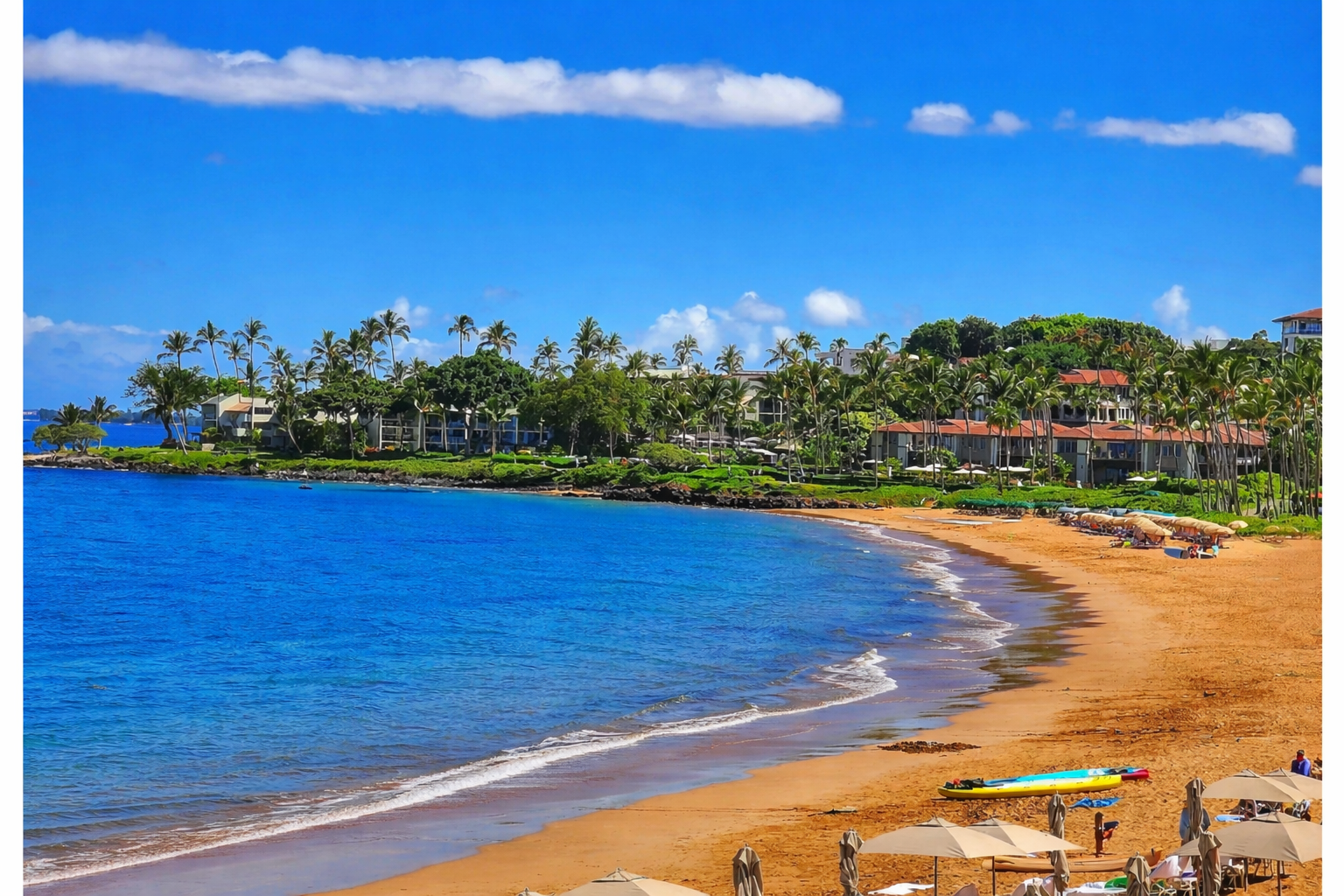
West Maui: Lahaina, Kaʻanapali, Napili, Kapalua
Dramatic coastline, resorts, sunsets. Real estate includes oceanfront condos and hillside homes.
Lahaina & Kaʻanapali: Busy, visitor-friendly, beachfront condos, some short-term rentals. Higher prices and tourism.
Napili & Kapalua: Quieter resort vibe, low-rise condos, golf courses, coastal views.
For pricing trends, see Maui Real Estate Market Report.
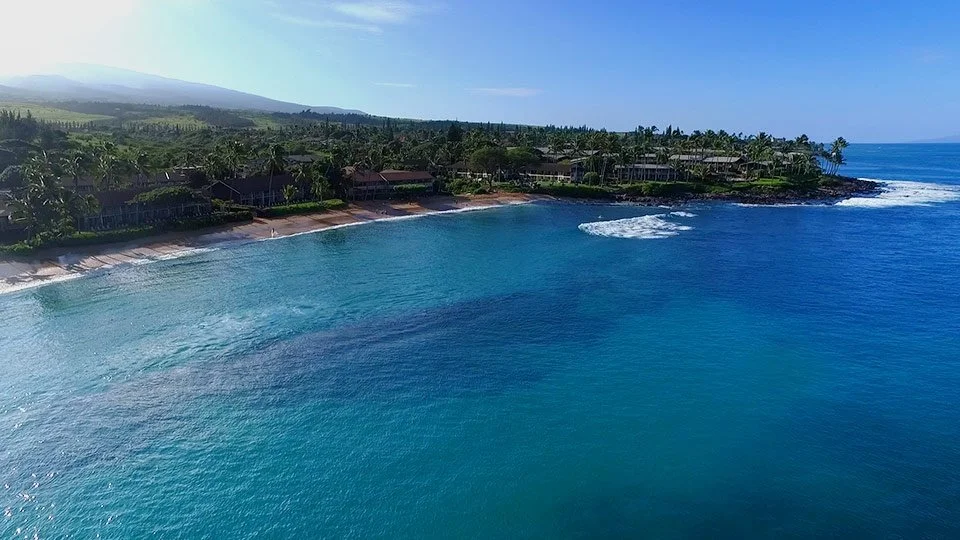
North Shore Maui: Paia and Spreckelsville
Known for a bohemian vibe, beaches, and windsurfing. Homes range from cottages to ocean-view properties. Explore Go Hawaiʻi – Maui for regional insights.
Paia: Small town with shops, galleries, and cafes. Mix of condos and homes. COffers both cottages and condos with distinct North Shore character.
Spreckelsville: Coastal area popular with surfers. Low-density homes with beach access. Quiet, relaxed North Shore lifestyle.
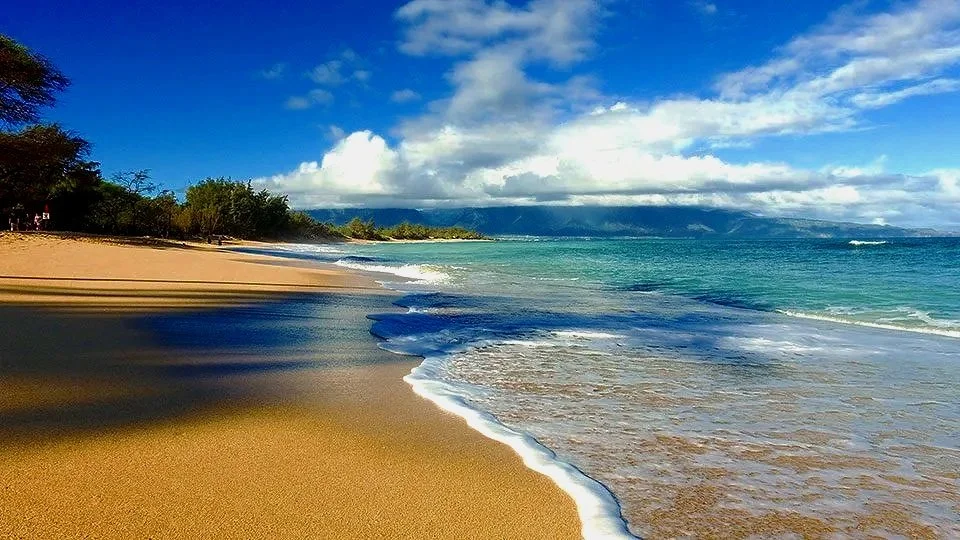
Upcountry Maui: Pukalani, Kula, Makawao, Haliʻimaile
Cooler, rural lifestyle with open land and privacy. Homes range from plantation-style to larger agricultural properties. Longer drive to beaches, but slower pace is a draw. Check zoning, water, and septic considerations via Maui County.

Central Maui: Wailuku and Kahului
Hub for daily life: airport, harbor, schools, shopping, medical facilities. Homes are traditional town-style, practical but not beachfront. Great for shorter commutes or local workers. For selling guidance, see Maui Sellers Guide

Cost of Living, Affordability, and Long‑Term Strategy
Maui is a high‑demand, limited‑land market, so prices can feel high compared to many mainland areas, especially near the ocean and in resort zones.
When you evaluate neighborhoods, think in terms of a long‑term real estate plan:
Is this a “for now” home or a “forever” home?
Would you rather buy something smaller or farther from the beach to get into the market sooner?
Are you comfortable with condo association fees, or would you prefer a fee‑simple home even if it’s farther inland?
Maui County planning and housing policies, which you can explore at https://www.mauicounty.gov, give useful context for how the island is managing housing, growth, and quality of life for residents.
If you already own and are deciding whether to sell, upgrade, or relocate to a different part of the island, you’ll find step‑by‑step guidance in the Maui Sellers Guide.
How to Use This Guide
Focus on 1–2 regions matching your lifestyle.
Check Maui Real Estate Market Report for pricing and inventory.
Consider retirement with 10 Reasons Why Maui Is the Best Place to Retire.
Homeowners can reference Maui Sellers Guide.
Discover the Maui lifestyle that suits you. Reach out via the Contact button below, and we’ll guide you thoughtfully through your options.
